
A battery can appear to fit inside its case and still shift during use. The problem is not always caused by the case itself. Internal space, battery dimensions, terminal placement, cable routing, mounting conditions, and movement from the surrounding equipment can all affect how securely the battery sits.
A small amount of unused space may seem harmless when the battery is placed in position. Once the equipment starts moving, however, that space can allow the battery to slide, rock, or press against the case wall. Repeated movement may also change the position of connected cables and place additional pressure on areas that were not intended to carry that load.
For this reason, checking the relationship between the battery and its enclosure involves more than comparing length and width. The vertical space, lid clearance, terminal location, cable direction, internal supports, and external mounting surface all need to work together.
The relationship between the battery and the inside of the enclosure is a key part of installation stability. If there is too much unused space around the battery, the enclosure may provide protection from the surrounding environment while doing little to restrict movement.
Consider a battery placed inside a box with noticeable gaps along the sides. When the equipment remains stationary, those gaps may not cause an obvious problem. During transportation, vibration, or repeated movement, the battery can gradually change position. A battery that shifts sideways may eventually press against one wall, while movement in another direction can affect the position of its terminals or cables.
The type of movement also matters. A battery may:
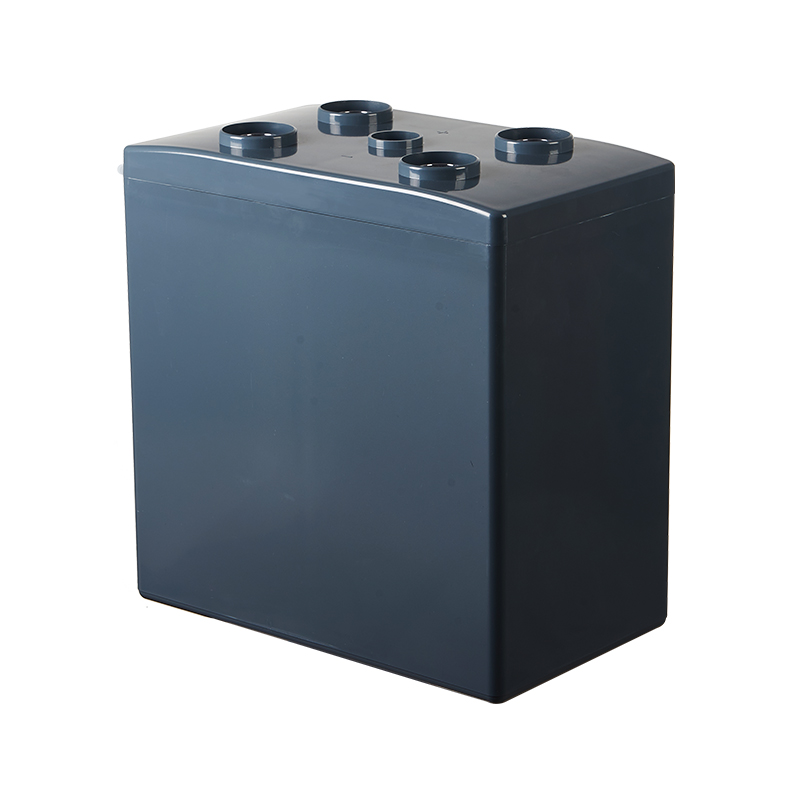
A Deep Cycle Battery Case therefore needs to provide a suitable relationship between internal space and battery dimensions. Excess room should not automatically be treated as useful installation space. Some clearance is necessary for fitting and maintenance, but uncontrolled movement can create a separate issue.
| Installation condition | Possible movement | What to inspect |
|---|---|---|
| Large side gap | Side-to-side shifting | Space between battery and walls |
| Uneven base | Rocking or tilting | Contact between battery base and support |
| Excess vertical room | Upward movement | Space beneath the lid |
| Poor mounting position | Movement of the entire case | External mounting surface |
The important distinction is between usable clearance and uncontrolled clearance. Space that allows access to the battery can be useful. Space that allows the battery to move freely is a different matter.
Checking the battery dimensions before installation helps establish whether the enclosure can accommodate it properly. The measurement should not be limited to the main body of the battery because external features can change the space that is actually required.
Length and width determine how the battery sits on the base. Height affects the relationship between the battery and the lid. Terminals, handles, connection points, and other raised areas can also extend beyond the main body.
The measurement process should therefore consider the battery as it will appear during actual installation rather than treating it as a simple rectangular object.
For example, a battery may have a body that fits comfortably within the enclosure while its upper components come close to the lid. In another case, the body may fit from side to side, but the available room for cable connections may be limited.
A practical measurement check can include:
These measurements also need to be compared with the inside of the enclosure rather than its external dimensions. Wall thickness and internal supports can reduce the usable area.
This is particularly relevant when replacing an existing battery with another model. Two batteries can occupy a similar amount of space while having different terminal arrangements or external shapes. A case that accommodated one battery may therefore need to be checked again before another battery is installed.
Vertical clearance deserves separate attention because a battery can have sufficient floor space while still creating a problem near the lid.
If the battery sits too high, the lid may interfere with the terminals or other components. If there is excessive space above the battery, movement in the vertical direction may become possible, especially when the base does not provide enough support.
The position of the battery on the base also affects this relationship. A slightly uneven support surface can change the height of one side and make the available clearance inconsistent across the enclosure.
A useful way to assess the situation is to consider three areas separately:
Base contact — whether the battery sits evenly and remains supported.
Upper clearance — whether the lid can close without contacting the battery or its connections.
Vertical movement — whether the battery can lift, rock, or change position during movement.
The lid should not be treated as a method of holding the battery down unless the enclosure is specifically designed for that purpose. Contact between the lid and battery components can create pressure in places that were not intended to receive it.
The following distinction can help during inspection:
| Vertical condition | Main concern |
|---|---|
| Limited clearance | Contact with lid or upper components |
| Uneven clearance | Battery may not sit level |
| Excessive clearance | Potential vertical movement |
| Changing clearance after installation | Battery or support may have shifted |
This makes height an installation consideration rather than simply another dimension to record.
Terminal placement can change how a battery fits even when the main body dimensions appear suitable. Terminals may be positioned toward different sides or areas of the battery, and that difference can affect the available space around the connections.
A case wall located close to a terminal may leave little room for attaching a cable. The same arrangement can also make it harder to route the cable without bending it toward the battery or enclosure.
Terminal position should therefore be checked together with the battery orientation. Turning a battery around may solve one clearance issue but create another around the cable outlet or mounting structure.
The relationship can be considered in three stages:
Battery position → terminal location → cable direction
Changing one part can affect the other two.
The enclosure should allow the connections to remain accessible without forcing the battery into an unusual position. If a battery needs to be pushed against one side simply to make the terminals accessible, the internal fit deserves another inspection.
Terminal placement can also become relevant when a battery is replaced. A replacement unit with similar external dimensions may use a different terminal arrangement, changing how it sits inside the same enclosure.
Cable routing is often considered after the battery has already been positioned, but the two issues are closely connected. A cable needs room to leave the battery, change direction, and reach its connection point without pulling the battery toward one side.
When a cable is too short for the available route, it may exert tension around the connection. A cable that is forced into a tight bend can also occupy space that was originally left clear around the battery.
The location of the cable opening matters as well. If the opening is positioned away from the terminal, the cable may need to cross part of the enclosure before exiting. This can reduce usable space and influence battery placement.
A practical check can focus on:
Cable routing should work with the battery position rather than determine it after the battery has been forced into place.
When a Deep Cycle Battery Case is installed in equipment that moves regularly, cable movement can become more noticeable. A cable that remains relatively still in a stationary installation may move repeatedly when the surrounding equipment vibrates or changes direction.
Once dimensions and connections have been checked, the internal support arrangement becomes important. The battery should have a stable base and suitable means of remaining in position without relying on accidental contact with the enclosure walls.
Internal supports can take different forms. Some arrangements use shaped areas on the base, while others use separate retaining components. The specific design depends on the enclosure and the battery being installed.
The purpose is not necessarily to eliminate every small gap. Instead, the support arrangement should prevent uncontrolled shifting while leaving enough access for installation and maintenance.
Several areas deserve attention:
A rigid outer shell alone does not guarantee internal stability. If the battery can move freely inside the shell, the enclosure may still experience repeated contact between the battery and its surrounding surfaces.
The mounting arrangement also needs to remain compatible with maintenance. A battery that is difficult to access may encourage installers to leave cables or retaining components in an unsuitable position.
Movement inside an enclosure becomes easier to notice when the equipment itself is moving. Vehicles, boats, mobile equipment, and other applications can expose the battery enclosure to repeated vibration.
The effect does not necessarily come from one large movement. Repeated smaller movements can cause a battery with unused internal space to shift gradually. Once the battery changes position, the cables may also move, and the original clearance around the terminals can change.
External mounting therefore matters alongside internal support. If the entire enclosure moves because its mounting surface is unstable, internal restraints have to deal with movement that originates outside the case.
A useful way to separate the problem is to inspect both areas:
Inside the enclosure
Outside the enclosure
A Deep Cycle Battery Case used in a moving environment needs to be considered as part of the complete installation rather than as an isolated container. Internal stability and external mounting influence each other.
If movement has already been noticed, replacing the enclosure immediately may not address the actual cause. A systematic inspection can help identify whether the issue comes from internal space, battery dimensions, connections, supports, or the surrounding installation.
Start with the battery position. Look for marks or contact points that indicate where it has been moving. Then compare its current position with the available space around it.
Next, inspect the base. An uneven support surface can allow rocking even when the side clearance appears acceptable. The lid should also be checked for signs of contact with the battery or its upper components.
Terminal and cable areas deserve attention as well. A cable that has shifted, become strained, or changed direction may indicate that the battery has moved or that the original cable route was not suitable.
Finally, inspect the enclosure mounting points. If the entire case can move relative to its mounting surface, the internal battery position may change even when the battery itself is properly supported.
A simple inspection sequence is:
The condition of the surrounding equipment should also be considered. A battery enclosure can only maintain its intended position when its own mounting arrangement and the surface supporting it remain stable.
When investigating movement, it is useful to separate the issue into space, support, connection, and environment. This avoids treating every movement problem as a simple case-size issue. A correctly sized enclosure can still experience movement if the battery lacks internal support, while a well-supported battery can still shift if the enclosure itself is poorly mounted.
A properly assessed Deep Cycle Battery Case installation therefore depends on the relationship between the battery, enclosure, connections, mounting surface, and operating environment. Looking at these elements together provides a clearer way to identify why movement occurs and which part of the installation needs attention.



 English
 русский
 عربى
عربى