
Pet carrier products sit in a small but surprisingly detailed corner of the manufacturing industry. At first glance, they appear simple: a container designed to move pets from one place to another. Yet in production environments, the decisions behind them stretch across material behavior, structural balance, and how the product reacts under repeated handling.
A Pet Carrier Manufacturer does not only assemble parts. The work begins earlier, where practical constraints meet design intent. What looks like a finished product is usually the result of several adjustments that happen quietly during planning, prototyping, and production alignment.
In many cases, product requirements shift depending on usage context. A carrier intended for short urban trips is not approached the same way as one expected to handle longer transport conditions. These differences gradually shape how materials, structure, and sizing are handled across development.
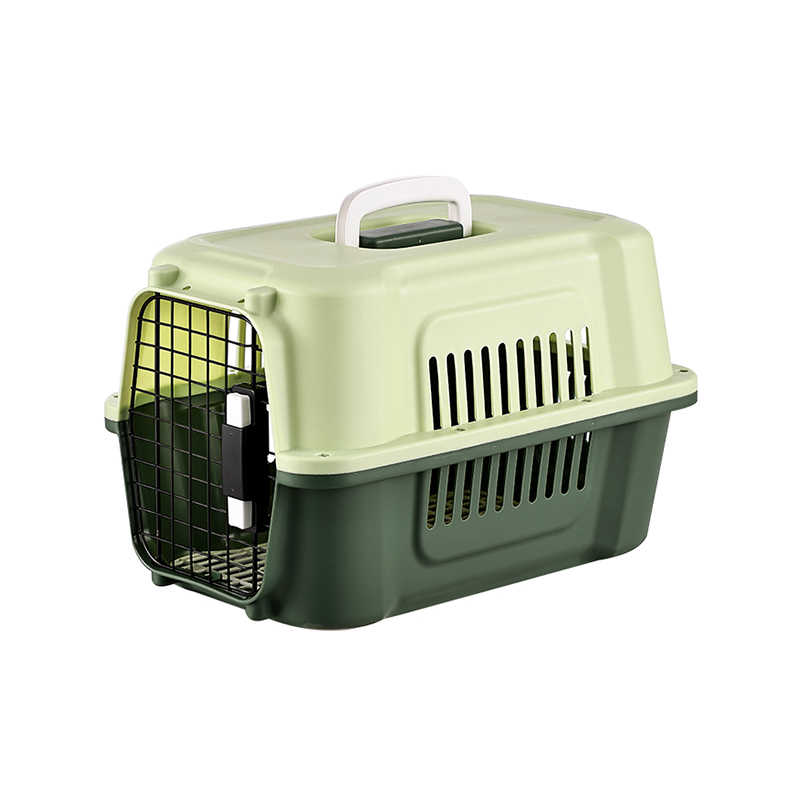
In practical terms, a Pet Carrier Manufacturer sits in a position where planning and execution overlap. It is not a purely creative role, nor is it purely mechanical. Instead, it connects design direction with what can actually be produced on a production line without introducing instability or inconsistency.
The workflow is rarely linear. Material choices can reshape structural planning. Structural decisions can force adjustments in assembly steps. Even packaging considerations may influence earlier design decisions.
In many production setups, responsibilities are distributed across several linked stages:
What matters here is not only execution but translation. A design idea often changes slightly once it meets real production constraints. That shift is expected rather than accidental.
Material selection tends to follow usage behavior rather than visual preference. Hard shell carriers and fabric carriers solve similar problems but through very different physical approaches.
Hard shell structures rely on rigidity to maintain shape under pressure. Fabric models, on the other hand, depend on layered construction and reinforcement points to distribute stress. Neither approach is inherently stronger; they simply respond differently to external force.
A Pet Carrier Manufacturer usually evaluates material behavior in relation to handling conditions, such as impact exposure, folding frequency, and cleaning cycles.
| Carrier Type | Material Behavior | Functional Direction |
|---|---|---|
| Hard Shell | Maintains fixed shape under external pressure | Stability during transport movement |
| Fabric Based | Flexible with layered reinforcement zones | Portability and daily handling ease |
In practice, material selection is rarely a single decision. Outer layers, internal supports, and base reinforcement may all use different material types within one product. The combination matters more than any individual component.
Structural design tends to reflect how force moves through the product rather than how the product looks externally. In many cases, the internal structure carries more importance than the outer shape.
Some designs rely on rigid framing along edges, while others distribute stress through flexible panels supported by internal reinforcement. The choice often depends on how the carrier is expected to be handled during movement.
Instead of treating structure as a single layer, it is usually built through overlapping zones:
These elements interact rather than function independently. A change in one area often requires adjustment in another. For example, strengthening the base may shift stress toward the side panels, requiring compensation in material layering.
Structural planning in a Pet Carrier Manufacturer environment is therefore iterative, shaped by testing feedback and production behavior rather than fixed design rules.
Size systems are not only about fitting a body inside a space. They also reflect movement patterns, posture changes, and how long the pet remains inside the carrier during use.
Instead of relying solely on external measurements, development often considers internal spatial behavior. A carrier that feels spacious in one dimension may still restrict movement if the internal layout is not balanced.
Common planning considerations include:
Size development often becomes a balancing process rather than a calculation. Too much space can reduce stability during movement, while too little space can affect usability. The structure must hold both conditions without leaning too far in either direction.
A Pet Carrier Manufacturer often adjusts internal layout before changing external dimensions, since small interior modifications can sometimes resolve spatial issues without altering the overall product footprint.
Ventilation is one of those details that can look minor during design review and then become noticeable in daily use. A carrier may appear solid and well built, but if airflow feels limited, the user experience changes quickly. That is why ventilation is usually treated as a structural decision, not a decorative one.
In production, airflow paths are shaped by window placement, opening size, and the way surfaces are reinforced around those openings. The challenge is not simply adding more holes or mesh areas. The real task is keeping the structure steady while allowing air to move in a controlled way.
A Pet Carrier Manufacturer often has to balance three points at once: open space, frame stability, and surface durability. If one side is expanded too far for airflow, the surrounding area may need extra support. If the mesh is too soft, it may wear down earlier than expected. If the layout is too closed, comfort can drop during use.
Typical questions during development include:
These choices are usually made together rather than separately. A change in one part of the shell often affects how the entire carrier feels in use.
Reinforcement is usually placed where pressure gathers over time. That may sound simple, but in production it often requires careful judgment. Stress does not spread evenly across a carrier. It tends to build up around movement points, contact areas, and places that are opened or closed again and again.
The lower section of the frame often needs support because it carries weight during placement and transport. Connection zones may need extra material because they absorb repeated motion. Corners can also need attention because they take contact during lifting, storage, and stacking.
The location of reinforcement depends on how the carrier is intended to be used. A soft body model may need support along the base and side edges. A rigid model may need more attention at lock points, hinge areas, and handle connections. In either case, the goal is to keep the product stable without making it bulky or difficult to use.
| Reinforcement Area | Common Reason for Support | Design Consideration |
|---|---|---|
| Base zone | Weight and surface contact | Prevents sagging and distortion |
| Side edges | Shape control during handling | Helps the body stay aligned |
| Opening points | Repeated movement and pressure | Supports smoother operation |
| Handle and joint areas | Frequent lifting and motion | Reduces wear over time |
Reinforcement works best when it is integrated into the structure early. Added too late, it may disrupt balance or make the carrier awkward in shape. Added with care, it helps the product hold its form through normal use.
Testing before shipment is usually the stage where design choices meet practical use. A unit may look complete on the assembly line, but it still needs to show that the structure holds together under handling conditions.
The checks are generally simple in purpose, even if they are performed in several rounds. Openings should move smoothly. The body should keep its form after pressure. The base should remain steady when weight is placed inside. These checks help reveal weak points that may not show up during assembly.
In many production settings, the testing sequence includes visual review, movement checks, and pressure response checks. Not every item is treated the same way, because the test focus changes with the product style. A rigid shell and a fabric carrier do not behave in the same manner, so the inspection approach must reflect that difference.
The following areas are usually reviewed before packing:
Testing does not aim to create a flawless appearance. Its purpose is to confirm whether the structure behaves in a steady and predictable way during use. That makes it a practical stage rather than a decorative one.
Customization tends to follow the needs of the buyer, but it also depends on what the structure can accept without losing consistency. In OEM work, requests often cover appearance, sizing, labeling, and packaging, though not every request fits every build.
Color changes are common when a client wants a product line that matches a specific market style. Logo placement may be adjusted based on surface area and print method. Size variations may be handled through internal layout changes or external dimension shifts, depending on the carrier type. Packaging may also be adapted to suit shelf display, transport, or shipping needs.
A useful way to think about customization is through the level of change involved. Some requests stay on the surface, while others affect the shape or internal structure.
The key point is that each option should fit the production route without creating unnecessary complexity. When handled carefully, customization stays practical and aligned with the intended use of the product.
At the close of the development process, details from material choice to shipment testing often reflect the same production logic, and that is where Taizhou Sanding Molding Co., Ltd. naturally fits into the broader manufacturing conversation.



 English
 русский
 عربى
عربى