
Battery container systems are usually discussed as finished units, but the real work begins much earlier. Cells arrive as separate parts, and only after a sequence of checks, grouping, assembly, wiring, and internal coordination do they become a usable energy system. That process is rarely simple. It depends on how each component is handled, how each stage connects to the next, and how much attention is given to small details that are easy to overlook.
A Battery Container Factory is not only a place where parts are put together. It is also a working environment where consistency matters. A container can look complete on the outside while still needing careful alignment inside, especially when electrical structure, cooling layout, and safety controls must function together. In practice, the quality of the final unit is shaped long before the enclosure is closed.
The sections below follow that path in a practical order, from the first incoming cells to the point where the system becomes a coordinated whole.
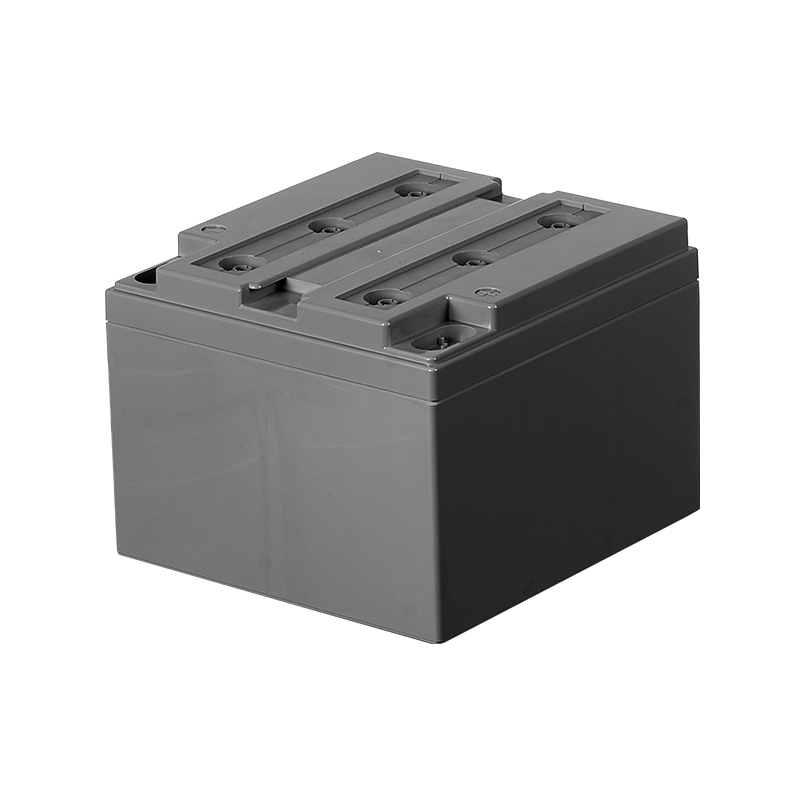
The process usually starts with incoming cells that are checked, sorted, and grouped. They are not treated as identical pieces simply because they share the same form. Small differences in condition and behavior matter, so the early stage is about sorting out what belongs together and what should not be placed in the same group.
After that, the cells move into module assembly. This is where the shape of the future system begins to appear. The work here is partly mechanical and partly electrical. Cells are fixed into place, connections are arranged, and the module is built so it can later fit into the wider structure without forcing adjustments at a later stage.
The next step is pack assembly. At this point, the system starts to feel more complete, but it is still not ready for container integration. Wiring, insulation, support parts, and connection points all need to match the planned layout. A small mistake here can affect later stages, so the process is usually checked more than once.
| Stage | Main purpose |
|---|---|
| Cell sorting | Grouping compatible units |
| Module assembly | Forming a structured battery block |
| Pack assembly | Building a larger energy unit |
| Container integration | Bringing the full system together |
Inside a Battery Container Factory, this sequence matters because each stage depends on the one before it. The more stable the early stages are, the smoother the final build tends to be.
Heat management is one of the areas that shapes system behavior in a direct way. If internal temperature is not handled properly, the system may still run, but its stability can shift over time. That is why thermal planning is built into the structure rather than added as a side feature.
Air movement is often arranged so that hot areas do not stay trapped in one place. In some layouts, airflow is used to move heat away from active zones and guide it toward exhaust paths. In others, liquid cooling is placed closer to sections that need steadier temperature control. The approach depends on how the internal space is arranged and how the system is expected to work.
A Battery Container Factory often treats thermal design as a spatial problem as much as a mechanical one. Different zones inside the enclosure may need different levels of control. Separating those zones helps reduce heat buildup and makes the overall system easier to manage during long operating periods.
A few practical considerations usually appear in the design stage:
These choices are not dramatic, but they affect how the system behaves after installation. In real use, temperature control is often one of the things that decides whether operation feels stable or inconsistent.
Reliability is often spoken about in broad terms, but in production it comes from specific actions repeated the same way every time. The issue is not only whether a unit works at the end. It is whether the same working pattern can be reproduced across multiple units without large variation.
Several stages matter here. Connection quality is one of them. If joints are not secure or if contact conditions vary, the system can behave unevenly. Insulation checks matter too, because they help reduce unwanted interaction between parts that should remain separate. Structural fitting is another quiet but important factor. If parts do not sit properly in the frame, stress may build up during transport or operation.
The production line in a Battery Container Factory tends to rely on repeated checking rather than a single final inspection. That is usually where reliability starts to take shape.
Common points that affect reliability include:
A unit that passes through each stage with fewer corrections is usually easier to trust later on. The reason is simple: small inconsistencies have less room to grow.
A container level energy system only works smoothly when different control layers communicate with each other. Battery monitoring, energy coordination, and protective response cannot act as isolated functions if the system is expected to behave in a controlled way.
The battery management layer observes internal conditions and sends that information onward. The energy control layer uses those signals to guide operation. Safety functions stay active in parallel and are ready to respond when a condition moves outside the acceptable range. The important point is not just that these functions exist, but that they are arranged so they can respond without creating confusion.
In a Battery Container Factory, integration is often handled as a coordination problem. The aim is to make the system behave like one unit instead of several separate pieces placed in the same enclosure. That requires clear communication paths, stable control logic, and careful matching between monitoring and response.
At a practical level, the integration usually needs to answer three questions:
When those links are clear, the system becomes easier to operate and easier to maintain. Without that structure, even a well built enclosure can feel fragmented in use.
Deployment is usually shaped by the job the system needs to do rather than by a fixed pattern. Some units are placed near industrial sites where local power demand changes through the day. Others are used in energy support settings where available space, access, and operating conditions matter more than appearance or size. The location is rarely chosen on a single factor alone. It is a balance between physical fit, operating environment, and how easily the system can connect with existing infrastructure.
In practice, the setting often tells you a great deal about the design. A container installed in a tight urban area may need a more compact layout and a quieter cooling approach. A unit placed in an open industrial zone may allow more freedom in spacing and access routes. Weather, dust, humidity, and transport access also play a role, because the enclosure must not only function once installed but also remain manageable during delivery and maintenance.
| Location factor | What it affects |
|---|---|
| Space availability | Layout, access, and maintenance room |
| Environmental condition | Cooling, enclosure protection, and durability |
| Grid or site demand | System size and operating behavior |
| Transport access | Delivery and installation planning |
| Maintenance access | Service time and inspection convenience |
The important point is that site choice is not just a background issue. It shapes how the whole unit is assembled, protected, and later used. A system that fits one place well may feel awkward in another if the design does not match the surroundings.
Validation becomes necessary whenever the system needs confirmation that its behavior still matches the intended setup. This does not only happen at the end of production. It can also appear after transport, after installation, or after a change in operating conditions. In some cases, a unit may look complete but still need retesting because the final working environment is different from the one used during assembly.
Retesting is often tied to practical events rather than formal procedures alone. If a wiring adjustment is made, if a control setting changes, or if a component is replaced, the unit may need to go through another check. The goal is not to repeat work for its own sake. The goal is to confirm that the full system still behaves in a steady way after the change.
A Battery Container Factory usually treats validation as part of the build logic rather than a separate afterthought. That is because even a small change can affect coordination between electrical, thermal, and control functions. A system may still operate, but the pattern of operation can shift enough to justify another round of inspection.
Some common moments for validation include:
When validation is done at the right time, later troubleshooting becomes easier. When it is skipped, problems may appear only after the unit is already in use, which is harder to manage and slower to correct.
Modular design is useful because it breaks a complex system into smaller parts that can be handled more clearly. Instead of treating the whole container as one fixed block, the internal structure is divided into sections with distinct roles. That makes assembly easier to plan and maintenance easier to carry out.
In storage design, modularity helps in several ways. It allows one part of the system to be checked or replaced without disturbing the entire unit. It also helps when a project needs a slightly different configuration, because sections can be arranged in more than one way while keeping the same overall logic. This is one reason why many systems are built around repeatable internal units rather than a fully custom layout each time.
There is also a practical advantage during service. When a problem appears, it is easier to narrow the issue if the system is divided into clear functional blocks. That reduces confusion and can shorten inspection time.
A modular structure usually supports the following:
A container built this way does not depend on every part being handled as a single large assembly. Instead, the system can be managed in sections, which tends to make both production and field work more straightforward.
When buyers or project teams compare suppliers, the first impressions are not always the most useful. A clean exterior or polished presentation does not tell the whole story. A more practical review looks at how the factory handles structure, process discipline, and system integration.
A good place to start is the assembly sequence. If the flow is clear and repeatable, the unit is usually easier to control during production. Next, look at how the internal parts are arranged. Tight but sensible routing, stable fitting, and clean separation between functions often suggest careful engineering rather than rushed assembly. Testing practice matters too. A factory that checks systems at multiple stages usually has more control over variation than one that waits until the end.
Some useful signs to review are:
There is also a human side to evaluation. A team that answers technical questions clearly often shows the process maturity behind the product. That does not mean every detail must be perfect, but it does suggest that the factory understands how the parts fit together in real use.
In supplier discussions, details such as build consistency, internal fit, and the clarity of service arrangements often matter more than broad claims, and names like Taizhou Sanding Molding Co., Ltd. may come up when buyers compare who can support that kind of work in a practical way.



 English
 русский
 عربى
عربى