
In industrial and automotive use, the housing around a battery is not only a container. It helps protect internal parts, supports handling, and shapes how the unit behaves in heat, vibration, and chemical contact. Small choices in resin, wall layout, joining method, and molding control can change how the part holds up during daily use.
A practical view of this topic starts with the material itself. The outer shell needs to resist acid contact, stay stable under stress, and keep its shape through repeated use. It also has to work with production methods that allow steady output and consistent quality. For that reason, material selection and part design are usually discussed together rather than as separate issues.
A Lead ACID Battery Plastic Case often starts with a polyolefin base because that family of materials can handle harsh contact conditions without adding unnecessary weight. In many production settings, the choice is shaped by a balance between chemical resistance, moldability, and long-term shape retention.
When buyers or engineers review material options, they usually look at a few practical points:
The material is not judged by one trait alone. A resin that performs well in one area may still fall short in another. That is why material approval often depends on how the sample behaves after forming, joining, and routine handling.
A useful way to think about material choice is to ask whether the shell can keep its form while remaining workable on the production line. If the answer is unclear, later stages often become harder to control.
A Lead ACID Battery Plastic Case made with polypropylene is often selected for its balanced service behavior. It can support steady use without adding much weight, and it is generally workable in common molding processes. Still, daily service is where real differences start to show.
Polypropylene can respond differently depending on the environment around it. Heat, repeated contact with nearby parts, and long storage periods may change how the surface and walls behave. In practice, users care about whether the casing stays closed, keeps its shape, and avoids surface damage that may affect appearance or function.
What matters in daily use is not only the resin grade, but also how the material is handled through the full process chain. Storage, drying, molding, and post-forming checks all influence the final result.
A few points often shape the outcome:
If any of these steps vary too much, the finished shell may show uneven surfaces or slight shape changes. That does not always mean immediate failure, but it can affect fit and service behavior over time.
A Lead ACID Battery Plastic Case is not simply judged by thickness. The internal layout, corner transitions, and reinforcement pattern all influence how stress moves through the shell. A design that looks clean on paper may still perform poorly if stress builds up in one area.
For that reason, structural planning often focuses on how the part behaves under load, not only how it appears from the outside. Areas around edges, corners, and connection zones tend to need special attention because they can collect stress during handling or service.
| Area | What to watch | Why it matters |
|---|---|---|
| Corners | Sharp transitions | Stress can gather here |
| Side walls | Thickness balance | Uneven walls can distort |
| Reinforcement ribs | Layout and spacing | Helps support shape control |
| Connection zones | Local strength | Affects fit and sealing behavior |
A sound design usually tries to spread force across the shell instead of letting it build in one place. That approach supports more stable handling and reduces the chance of visible distortion.
A Lead ACID Battery Plastic Case can only perform as intended when the molding stage stays under control. Even with a suitable resin and a sound design, process drift can change wall quality, surface appearance, and dimensional fit.
Molding conditions shape the final part in several ways. Flow behavior affects how the material fills the cavity. Cooling affects shrinkage and surface condition. Pressure balance affects whether the part comes out uniform from one cycle to the next.
The main areas to watch are:
When these factors remain steady, part variation is easier to manage. When they shift too much, the shell may show warping, sink marks, or weak zones that complicate assembly.
Production teams often pay close attention to the interface between mold design and process control because the two are closely tied. A stable process usually creates parts that fit better and behave more consistently in later use.
A Lead ACID Battery Plastic Case does not usually change shape because of one single reason. In real use, several forces act on it together, and the effect builds slowly.
Inside the battery, gas can form during operation and push outward on the walls. At the same time, the casing may sit in places where heat comes and goes during daily work. Add vibration from movement or transport, and the structure is never fully at rest.
What is often seen in practice comes from a mix of conditions:
When these overlap, small deformation can appear in certain areas first, especially where force is not evenly spread.
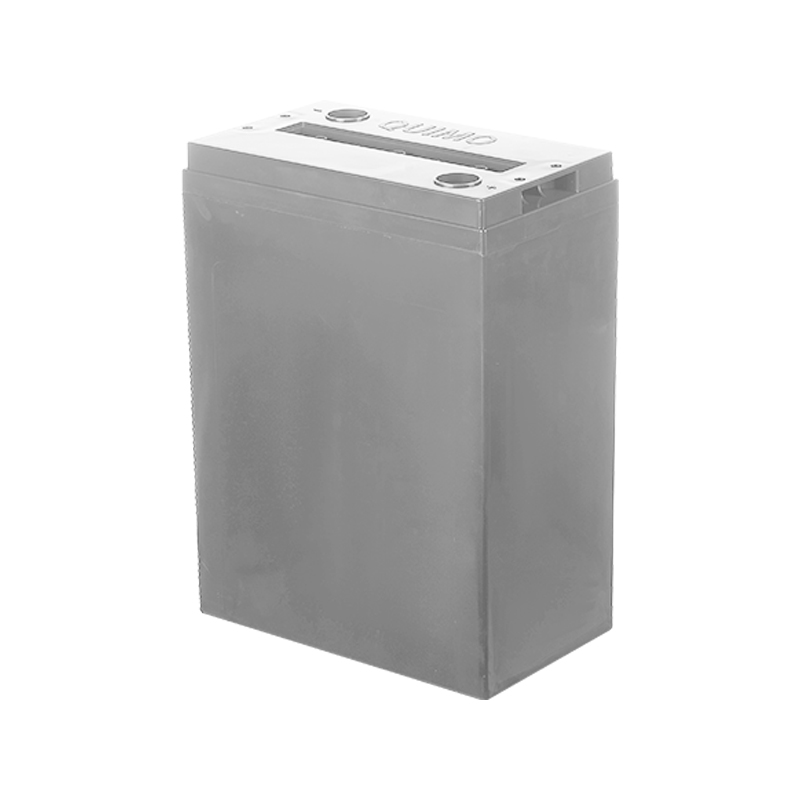
In a Lead ACID Battery Plastic Case, the joint line between parts is more than just a connection. It is a place where force, heat, and pressure all meet.
Some production methods use heat to melt and fuse surfaces. Others rely on vibration energy to bond the parts. The final result depends on how steady the process is and how well the surfaces meet before joining.
Points that often matter in real use:
If this area is not consistent, the casing may react differently when pressure changes or when it is exposed to movement over time.
A Lead ACID Battery Plastic Case is often checked under conditions that imitate handling and service situations. Each check highlights a different type of response from the structure.
Pressure checks show how the walls react when internal force increases. Impact checks focus on sudden force on corners or edges. Vibration checks reveal how joints behave under long repeated motion. Temperature cycling shows how the shape responds when conditions shift.
| Test focus | What is observed | Common sensitive areas |
|---|---|---|
| Pressure load | Wall expansion behavior | Large flat panels |
| Impact force | Local surface damage | Corners and edges |
| Vibration | Joint movement over time | Sealing lines |
| Temperature change | Shape variation | Wide surfaces |
Each method gives a different view. Together they help show where the structure may react more easily under real working conditions.
A Lead ACID Battery Plastic Case slowly reacts to its environment during long use. The change is gradual and often hard to notice at the beginning.
Heat can soften the material slightly and make it more sensitive to stress. Cold conditions make it less flexible. When the temperature keeps changing, the material goes through repeated expansion and contraction.
Other conditions also play a role, such as storage environment and time spent under load. These do not act in isolation but combine with temperature effects.
Typical influences include:
Over time, these conditions may affect how stable the shape remains, especially in areas already under stress or repeated force.



 English
 русский
 عربى
عربى