
Jujiang has launched a new AGM start-stop battery for automotive start-stop systems. As part of the cooperation between the two companies, the new battery uses a plastic battery case supplied by Taizhou Sanding Molding Co., Ltd. The case provides the structural support required for the battery.
AGM, short for Absorbent Glass Mat, batteries are mainly used in applications such as automotive start-stop systems. Battery structure, dimensions, and case design need to match the finished battery. In an AGM start-stop battery, the plastic case houses the internal components while providing external separation and protection. Its size and structure therefore need to fit the battery assembly and installation requirements.
The case supplied for the new product is part of the company's work in developing and producing plastic cases for automotive batteries.
The company has long been involved in mold manufacturing and plastic product development and production, with battery cases as one of its key product areas. Its plastic battery case range covers lead-acid battery applications, including automotive batteries, energy storage batteries, and communication batteries.
For the AGM start-stop battery in this project, the case is developed around the battery's structure and dimensions. The design needs to take into account the external dimensions, the space needed for internal components, and the requirements of assembly and injection molding.
The company handles both mold design and manufacturing and plastic product production. These capabilities allow mold development to be connected with injection molding within the same production system, providing battery customers with support from product development through volume production.
A plastic case for a lead-acid battery is an important external structural component. It is used to hold the electrolyte, plate assembly, separators, and other internal components, while also providing external separation and protection.
Automotive batteries come in different capacities, dimensions, and structures. Their cases therefore need to be developed around the requirements of the specific battery. The case must provide suitable space for internal components while also fitting the assembly and production process.
The current automotive AGM start-stop battery case range includes LN2, LN3, LN4, LN5, and LN6 specifications. These cases are designed for automotive batteries with different capacities and dimensions.
During injection molding, mold precision, material selection, product structure, and processing conditions can all affect dimensional consistency and molding quality. Battery case production therefore involves more than the molding stage. Product design and mold development are also important parts of the process.
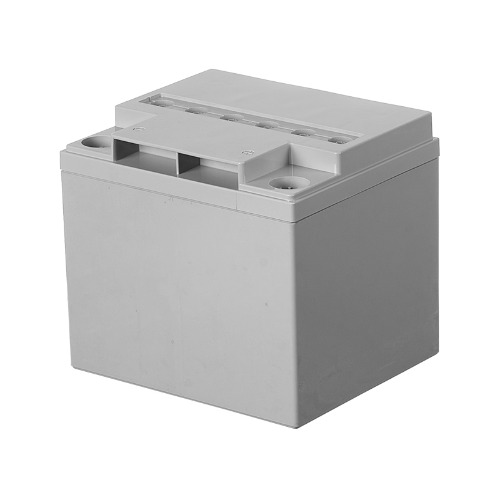
The company continues to develop plastic battery cases for lead-acid battery applications. Along with cases for automotive AGM start-stop batteries, its product range also includes plastic cases for energy storage and communication batteries.
These cases mainly house internal battery components and provide external protection. Their dimensions and structures are developed according to the battery design and application requirements.
The battery case products cover automotive, energy storage, and communication applications. Automotive battery cases remain an important product direction, with different specifications developed for plastic structural component requirements in battery manufacturing.
A battery case is an injection-molded structural product. Its development can involve product design, mold design, mold manufacturing, trial molding and adjustment, followed by volume injection molding. The mold is an important link between product design and production, while its structure and processing quality affect the molding result.
The company focuses on mold manufacturing and plastic product development and production. Its production process covers product design and development, mold manufacturing, injection molding, and product delivery. ODM and OEM models are mainly used, allowing customer requirements to be considered during product development before volume production.
For battery case projects, product structure, mold manufacturing, and injection molding need to work together. This allows cases to be developed and produced for different battery models and specifications.
Established in 2007, the company is located in Taizhou Bay New Area, Taizhou, Zhejiang Province, and has long focused on mold manufacturing and plastic product development and production.
For battery cases, the mold is a key part of volume injection molding. Dimensions, structural consistency, and assembly fit all need to be considered during mold development. In-house mold design and manufacturing capabilities allow mold development to be followed by battery case injection molding within the same production system.
Mold, material, and injection molding conditions also need to work together during development. Based on the customer's product structure and requirements, the company can carry out mold and product development before moving into injection molding production. This connects the main stages from battery case development to volume delivery.
The new AGM start-stop battery uses a plastic case supplied by the company. It is an example of battery case production for the automotive battery sector.
An AGM start-stop battery needs to match vehicle operating conditions and installation requirements. Its external case also needs to meet requirements related to dimensions, structure, and assembly. Mold development and injection molding provide the manufacturing basis for producing the corresponding case.
For the company, the project adds to its experience with automotive battery cases and provides further production experience with cases in different specifications and product structures.
Battery cases are one of the company's core product directions. Its mold manufacturing and plastic product development and production capabilities support the development and production of automotive battery cases, energy storage battery cases, and communication battery cases.
The range covers different application areas, with case development carried out according to battery dimensions, structures, and assembly requirements.
The company will continue to work on battery cases and related plastic products, using mold development and injection molding as the main manufacturing foundation. Product development and production will continue to address requirements from automotive, energy storage, and communication battery applications.



 English
 русский
 عربى
عربى