
A cat litter box is usually judged by how quietly it fits into daily life. When it asks for less effort, causes fewer messes, and does not complicate cleaning, people notice. That is where a drawer-style design changes the conversation. It is not only about holding litter in place. It is about how the box supports routine care, how it handles waste removal, and how it fits into the flow of a home.
A Drawer Cat Litter Box brings structure to a task that many owners prefer to keep simple. The idea is easy to grasp, but the value sits in the details. The opening height, the drawer movement, the inner tray, the enclosure shape, and the cleaning path all affect daily use. A product with the right layout can feel natural after a short period of adjustment, while a poorly planned one can create extra work even if it looks neat on a shelf.
A traditional tray usually presents one open space and one cleaning routine. The user lifts, scoops, wipes, and resets the same surface every time. A drawer-based format changes that routine by separating the waste-handling step from the main body of the box. Instead of reaching deep into a fixed chamber, the user can remove part of the unit and deal with the contents in a more direct way.
That difference matters because it changes how the owner interacts with the product. The motion is simpler, the working area is easier to access, and the task feels less scattered. In many homes, that alone makes the box easier to keep in regular use. It also helps reduce the sense that cleaning is a separate chore that interrupts the rest of the room.
Another practical difference lies in containment. Open trays often leave litter exposed to movement, air flow, and accidental kicking. A drawer format can place more control around the interior space, which helps keep the cleanup area more defined. That does not remove the need for maintenance, but it often makes the task more contained and predictable.
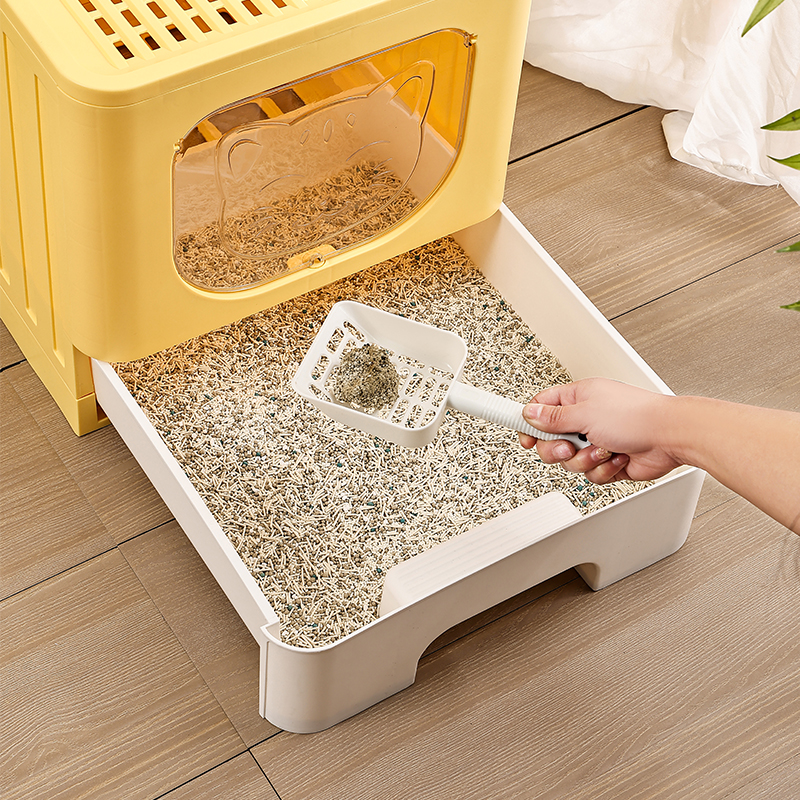
At a structural level, the box depends on a simple sequence. The cat enters, uses the enclosed or partially enclosed interior space, and the waste remains collected in the internal area until the drawer is opened or removed. The user then handles the waste section without disturbing the entire body of the product. That flow is the central reason the format feels different.
The design usually includes a main shell, an entry area, an internal chamber, and the drawer section. Each part plays a role in how the product behaves during use. The shell gives shape and stability. The chamber creates the space the cat uses. The drawer collects the waste or allows the inner area to be cleaned without fully dismantling the product. When these parts align well, the product feels straightforward rather than technical.
The real test comes in daily life. A good layout does not call attention to itself every time it is used. It allows the cat to enter without hesitation and the owner to clean without awkward steps. That balance is what makes the design feel sensible instead of complicated.
| Design Element | What It Does | User Impact |
|---|---|---|
| Main shell | Holds the overall shape | Helps the box stay stable in use |
| Entry area | Gives the cat access | Affects comfort and acceptance |
| Inner chamber | Contains litter and waste | Supports cleaner daily handling |
| Drawer section | Separates the cleaning step | Makes waste removal feel more direct |
Drawer design matters because it changes the product from a single open cavity into a system with defined steps. That matters for both the cat and the owner. For the cat, the space should feel steady, quiet, and easy to enter. For the owner, the cleaning routine should feel clear and repeatable. The drawer makes that split possible.
From a development perspective, the drawer is not just an added part. It affects how the box opens, how it closes, how waste is collected, and how the product holds up after repeated use. If the movement feels rough or the fit is loose, the entire experience suffers. If the movement feels smooth and the closure stays reliable, the product becomes much easier to live with.
Design teams also have to think about how the drawer changes the shape of the whole unit. A deeper drawer may support a cleaner interior path, while a compact one may fit better in smaller homes. A wide opening can help with access, yet it may also affect how tidy the box feels in the room. The design decision is never only visual. It affects behavior, maintenance, and comfort at the same time.
A related point is noise. Owners often notice sound more than they expect. If the drawer scrapes or clatters, the box can feel less discreet. A careful fit and a controlled slide can reduce that problem and make the unit feel more settled in everyday use.
Material choice shapes almost every part of the user experience. The surface needs to hold up under repeated cleaning, resist moisture, and remain comfortable to handle. It also needs to work well with the drawer motion, since a rough surface or weak join can make the product harder to maintain.
Plastic is common because it can be shaped into stable forms and cleaned with relative ease. Some builds use thicker walls for a firmer feel, while others rely on lightweight parts that are easier to move. The balance depends on the intended use. A material that feels too light may shift during use. A material that feels too rigid may be harder to handle during cleaning or repositioning.
Smooth inner surfaces are useful because they reduce the chance of litter sticking in corners. Clean edges also matter because they make wiping and rinsing less difficult. When surfaces are uneven or poorly finished, waste can collect in places that are hard to reach. That makes routine care feel longer and less direct.
| Material Choice | Practical Effect | Daily Use Result |
|---|---|---|
| Smooth plastic | Easier wiping and rinsing | Less time spent on cleaning |
| Firmer wall structure | Better shape retention | More stable handling |
| Rounded internal edges | Fewer buildup points | Cleaner interior surface |
| Lightweight build | Easier to move | Simpler repositioning |
The material should also work with the drawer hardware or sliding path. If the contact points wear down too quickly, the product may lose the smooth motion that makes the format useful. This is one reason manufacturing decisions and user comfort are closely linked.
Cats often move litter around while entering, turning, and exiting the box. Some scatter happens during the digging process, and some happens when litter clings to paws and drops later on the floor. A drawer-based format can reduce that mess by creating a more controlled interior path and a clearer boundary between the litter area and the surrounding space.
That control starts with the shape of the opening and the height of the entry. If the access point is too low, litter escapes more easily. If it is too awkward, the cat may hesitate. A thoughtful design aims for a middle ground that supports comfort while keeping the litter zone more contained.
The surrounding edges also matter. A raised side can help keep litter from being pushed outward, especially when the cat turns or scratches with energy. Interior corners that are too sharp or too open can leave room for spillover. A cleaner boundary usually leads to a cleaner floor.
The drawer itself does not eliminate tracking, but it can make the environment easier to manage. When the owner can remove waste without disturbing the whole setup, the surrounding area stays more orderly. That difference may seem small at first, yet it often affects how people feel about placing the box inside a living space rather than hiding it away.
Size choice affects both comfort and placement. A box that is too tight may discourage use, while one that is too large may be difficult to fit into the intended room. The aim is to match the product to the cat's movement and the home's available space without making either side feel compromised.
Cats vary in body shape, turning style, and entry habits. Some enter with little hesitation and move directly to the center. Others prefer more room around them, especially when they dig or reposition. The box should give enough internal space for those natural movements while still keeping the design compact enough for daily living.
Home space also matters in a practical way. A litter box often sits in a corner, hallway edge, laundry area, or utility room. That placement affects how easily the drawer can be opened, how the cat approaches the entry, and how often the owner notices the unit during daily routines. A product that fits the room naturally is usually easier to keep in service over time.
Use the following points as a simple guide when matching size to setting:
A buyer usually wants a box that feels simple from the first use and still holds up after repeated cleaning. That is why feature selection matters. Small details can make a clear difference in how the product behaves in the home.
Start with the drawer action. It should move in a controlled way and return without struggle. A rigid or uneven sliding motion can make the box feel frustrating even when the rest of the design looks sound. Next, check the entry design. The opening should support easy access while still keeping the interior space contained enough to limit scatter.
The cleaning surface is another key point. A smooth, easy-to-wipe interior will save time and make maintenance feel less repetitive. Seams, edges, and corners should be shaped with care so litter does not gather in hard-to-reach spots. These small points often determine whether the box feels convenient or merely compact.
Also consider how the unit fits the room. A box that opens cleanly but blocks a walkway will create a different kind of problem. A thoughtful product should make sense in both placement and use.
Manufacturers shape the experience long before the product reaches the home. Their choices affect movement, balance, surface finish, and the general feeling of reliability. Good design is not only about appearance. It is about how the product behaves after repeated use.
One area to improve is the transition between the drawer and the main body. The fit should feel consistent so the unit opens and closes without friction that wears on the user. Another area is internal finish. Smooth surfaces and careful edge treatment reduce cleaning trouble and help the product stay more manageable over time.
Manufacturers can also think about the range of homes where the product will be used. A layout that works in a quiet corner of a large room may need adjustment for a smaller apartment or a shared living space. This is where design choices become practical decisions. A more adaptable product can serve a wider range of household layouts without needing a dramatic change in style.
| Development Focus | Why It Matters | What It Can Improve |
|---|---|---|
| Drawer fit | Affects opening and closing | Easier daily handling |
| Interior finish | Influences cleaning | Less buildup and less effort |
| Entry shape | Shapes cat acceptance | Smoother use for the cat |
| Space planning | Affects placement | Better fit inside the home |
A well-built unit should feel calm rather than demanding. It should support routine care without asking the owner to adjust too much of the surrounding space or routine. When that happens, the product becomes part of the room instead of an extra burden inside it.
The value of a Drawer Cat Litter Box comes from that combination of structure, use, and maintenance. It is a design built around daily behavior, not a one-time impression. That is why the details matter so much. When the form is aligned with the task, the box fits into real life with less resistance and more consistency.



 English
 русский
 عربى
عربى